



Introduction
Most discussions about Wuthering Waves focus on combat fluidity, Echo farming, character design, or the game’s fast traversal systems. Yet the real intellectual core of the game is neither its action mechanics nor its gacha economy. The defining idea of Wuthering Waves is the concept of “frequency” as the foundation of existence, and nowhere is that idea explored more deeply than through the Tacet Discords.
At first glance, Tacet Discords appear to be ordinary monsters inhabiting a post-apocalyptic world. But the deeper the story progresses, the more obvious it becomes that they are not simply enemies. They are manifestations of instability, memory collapse, emotional residue, and distorted resonance. The game’s entire cosmology — including the Lament, the Echo system, Resonators, Tacet Fields, and even the Rover’s identity — revolves around the relationship between sound, frequency, and existence itself.
This article examines one specific subject in depth: how Tacet Discords function not only as creatures, but as the philosophical backbone of Wuthering Waves. Their existence explains why Solaris-3 looks the way it does, why civilization evolved after the Lament, why memories matter more than physical matter, and why the game constantly blurs the line between humanity and monstrosity.
The Lament and the Birth of a Frequency-Based World
The Disaster That Rewrote Reality
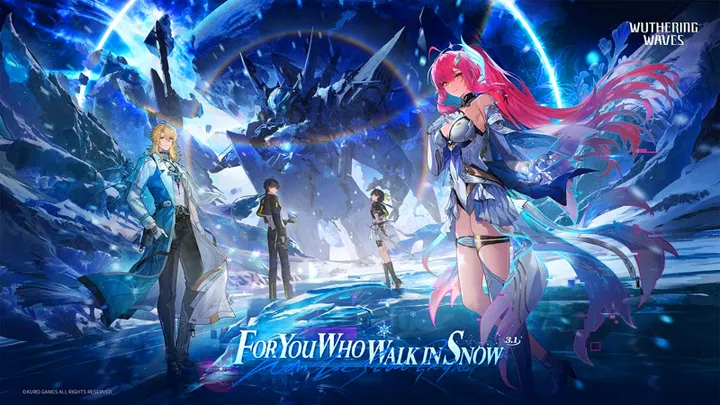
The setting of Wuthering Waves begins after a catastrophe known as the Lament, an event so destructive that it permanently altered the laws of the world. Humanity did not merely suffer a war or environmental collapse. Reality itself changed structure. The game repeatedly suggests that the universe of Solaris-3 no longer operates according to stable physical systems. Instead, existence became dependent on waves, resonance, and frequencies.
The Waveworn Phenomena emerged directly from the Lament. Tacet Fields, Etheric Seas, Retroact Rain, and gravitational anomalies are not isolated disasters. They are symptoms of a world where resonance has become unstable. In older science fiction, monsters invade from outside civilization. In Wuthering Waves, the monsters are born from the damaged structure of reality itself.
Why This Matters Narratively
This approach changes the tone of the entire setting. Solaris-3 is not fighting an external alien invasion. Humanity is living inside a wounded world that continuously produces instability. Tacet Discords are therefore less like invading demons and more like the “echoes” of a broken planetary system.
The game’s environmental storytelling constantly reinforces this point. Destroyed skyscrapers, abandoned laboratories, distorted weather systems, and resonance storms all imply that civilization survived physically but lost its understanding of reality itself. The world feels unstable because it truly is unstable.
Tacet Discords Are More Than Monsters
The Meaning Behind Their Existence
Official lore describes Tacet Discords as beings formed from residual chaotic frequency energy under the Waveworn Phenomenon. They possess Tacet Cores and survive by consuming frequencies from other entities.
That description sounds technical, but its implications are enormous. Tacet Discords are not biological organisms in the traditional sense. They are resonance entities. They imitate behaviors, shapes, instincts, and even emotional states based on the frequencies they absorb. This makes them fundamentally different from ordinary fantasy creatures.
In many RPGs, monsters exist because the game needs enemies. In Wuthering Waves, Tacet Discords exist because the world itself is unstable. They are consequences, not invaders.
The Importance of Mimicry
One of the most unsettling aspects of Tacet Discord lore is their ability to mimic what they consume. This introduces a recurring theme throughout the game: identity is not fixed. Frequencies can overlap, merge, decay, and transform.
That idea also explains why Echoes can be harvested and equipped by Resonators. When a Tacet Discord dies, its resonance patterns do not disappear immediately. Instead, fragments remain and can be reused. Humanity survives by weaponizing remnants of corrupted existence itself.
This creates a morally ambiguous system. Players constantly absorb, equip, and manipulate the remains of creatures that may once have possessed traces of memory or consciousness. Wuthering Waves rarely addresses this directly, but the implication remains beneath every battle.
The Philosophy of “Tacet” and Silence
Why the Terminology Matters
The word “Tacet” is a musical term meaning silence — specifically, an instruction for a musician not to play during a section of a composition. This is not accidental naming. Wuthering Waves builds nearly all of its lore around sound theory, musical structure, resonance, and interruption.
“Tacet Discord” can therefore be interpreted as a contradiction. Discord implies chaotic sound. Tacet implies silence. The monsters are literally manifestations of broken resonance: silence becoming noise, or harmony collapsing into distortion.
A World Built on Resonance
The naming conventions throughout the game reinforce this interpretation:
- Resonators
- Reverberation
- Echoes
- Frequency
- Tacet Fields
- Waveworn Phenomena
Even combat mechanics mirror these concepts. Characters do not simply cast magic. They resonate. Abilities operate through harmonic interaction rather than elemental mysticism alone.
Many players initially criticized the game’s heavy jargon, but over time parts of the community began appreciating how consistently the terminology supports the world’s central concept.
Tacet Fields and Spatial Corruption
The Geography of Instability
Tacet Fields are among the most visually distinctive phenomena in the game. They are areas where the world becomes spatially unstable, often featuring inverted skies and distorted landscapes. According to in-game lore, they connect Solaris-3 to unknown spaces through Resonance Cords.
Importantly, Tacet Fields are believed to be the origin points of Tacet Discords. This transforms them from simple gameplay arenas into locations of existential danger. They are wounds in reality where corrupted frequencies gather and condense.
These areas do not simply look dangerous. They feel unnatural on a conceptual level. Gravity behaves inconsistently. Sound design becomes hollow or distorted. Colors appear faded or over-saturated. The environment itself communicates that the player has entered a place where the normal rules of existence no longer apply.
The Psychological Impact of Tacet Fields
What makes Tacet Fields especially effective as worldbuilding devices is their emotional atmosphere. They feel wrong before enemies even appear. Their skies invert natural order. Their environments distort perspective. The player instinctively recognizes that the laws of normal reality no longer apply.
This environmental storytelling matters because Wuthering Waves rarely explains everything directly. Instead, it uses audiovisual discomfort to imply instability. Tacet Fields are physical manifestations of dissonance.
The result is a setting that feels psychologically oppressive even during exploration. The world constantly reminds players that beneath every stable city lies the possibility of collapse.
The Echo System and Humanity’s Moral Compromise
Weaponizing the Dead
The Echo system is one of the game’s most original mechanics because it transforms enemy remains into combat tools. From a gameplay perspective, Echoes function as equipment and abilities. From a lore perspective, however, the implications are darker.
Humanity survives by harvesting the residual resonance of destroyed Tacet Discords. The monsters do not completely disappear after death. Their frequencies linger long enough to be captured and repurposed.
This means civilization is dependent on controlled corruption. The line between using power and becoming contaminated by it becomes increasingly unclear.
Many science fiction settings feature humanity exploiting dangerous resources. Wuthering Waves applies this idea emotionally and philosophically rather than economically. Echoes are not fuel. They are preserved fragments of unstable existence.
Echoes as Memory Fragments
Echoes are not merely power sources. Symbolically, they represent preserved traces of existence. A Tacet Discord’s resonance pattern continues after destruction, almost like memory surviving death.
This creates one of the game’s recurring themes: nothing fully disappears on Solaris-3. Frequencies persist. Emotions persist. Trauma persists. The past echoes endlessly into the future.
That idea also explains why so many ruins throughout the game feel emotionally charged. The world itself appears capable of retaining resonance impressions. History is not forgotten because reality literally remembers it.
The Rover’s Relationship With Tacet Discords
An Abnormal Connection
The Rover is not simply a hero fighting monsters. From the beginning of the story, the protagonist demonstrates an unusual compatibility with Tacet Discord powers. The ability to absorb Echoes immediately distinguishes the Rover from ordinary individuals.
The Tacet Mark appearing on the Rover’s hand after absorbing a powerful Echo is especially important. It visually symbolizes a bond between the protagonist and the corrupted resonance of the world.
Unlike many RPG protagonists, the Rover does not stand entirely outside the setting’s corruption. The character appears intertwined with it. This makes the story feel less like a heroic journey and more like an investigation into identity itself.
The Fear of Becoming Something Else
Several community theories emerged early in the game’s life cycle suggesting that Resonators and Tacet Discords may be more closely connected than humanity realizes.
Even if the full truth remains unclear, the narrative repeatedly hints that resonance power carries transformative risks. Characters already exhibit non-human traits, unusual physical mutations, or resonance-induced abnormalities. The possibility that humanity and Tacet Discords exist on a spectrum rather than in opposition remains one of the game’s most compelling mysteries.
This uncertainty creates tension throughout the narrative. Every new resonance ability raises the same question: how much instability can a person absorb before they stop being human?
The Black Shores and the Management of Catastrophe
A Civilization Built Around Prediction
The Black Shores organization represents humanity’s most advanced attempt to understand and manage the Lament. Unlike ordinary military groups, the Black Shores operate almost like cosmic disaster analysts. Their systems monitor Tacet Discord activity, resonance fluctuations, and future catastrophes.
The existence of the Tethys System is particularly significant. Rather than relying on brute force, humanity attempts to simulate and predict reality itself. This reflects a broader philosophical shift within the game’s world: survival depends on understanding frequencies, not simply defeating enemies.
The Black Shores embody the transition from old-world science to post-Lament science. Traditional physics appears insufficient for understanding Solaris-3. Resonance theory becomes the new foundation of civilization.
The Black Shores as a Symbol
The Black Shores are built upon Tacetite ore and surrounded by digital fog, reinforcing the idea that advanced civilization in Solaris-3 can only exist through controlled interaction with unstable resonance.
Humanity no longer stands apart from corruption. It builds infrastructure directly on top of it.
This idea separates Wuthering Waves from cleaner science fiction worlds where technology restores order. Here, technology merely stabilizes instability temporarily. Civilization survives through constant maintenance against collapse.
Why Tacet Discords Feel Different From Traditional RPG Enemies
They Operate Like Ecological Forces
Traditional RPG monsters usually occupy clear narrative roles:
- Wild beasts
- Demonic invaders
- Artificial weapons
- Ancient evils
Tacet Discords function differently because they behave more like environmental consequences. They emerge from resonance imbalance, consume frequencies to survive, and evolve according to the energies surrounding them.
This makes them feel closer to natural disasters than enemy factions. Even when they are hostile, their existence does not necessarily imply morality. They are products of a damaged ecosystem.
That distinction subtly changes the emotional tone of combat. Players are not simply killing evil creatures. They are participating in an endless containment process against the consequences of a fractured reality.
The Tragic Dimension
Some side stories and environmental details suggest that not all Tacet Discords are purely malicious. Certain creatures behave passively or display unusual emotional traits.
That ambiguity is important. Once monsters stop being unquestionably evil, every battle gains philosophical weight. The player is no longer exterminating demons. They are interacting with unstable manifestations of a broken world.
The tragedy becomes even deeper when considering that Tacet Discords may carry resonance traces of previous beings, memories, or emotional states. If frequencies preserve existence, then destruction may never be entirely clean.
The Role of Sound and Music in Narrative Structure
Combat as Musical Expression
Wuthering Waves constantly integrates musical concepts into gameplay systems. Resonance chains, vibration-based attacks, frequency manipulation, and rhythmic combat timing all reinforce the idea that reality behaves like an enormous composition.
The combat system’s speed and fluidity contribute to this interpretation. Battles feel less like slow tactical exchanges and more like synchronized performances. Characters weave attacks together like overlapping melodies.
Even dodge counters and combo transitions resemble rhythm structures. The game subconsciously trains players to “feel” combat timing the same way musicians feel tempo.
Discord as Narrative Conflict
The concept of “discord” carries dual meaning. In music, discord refers to dissonance and tension between notes. In the game, Tacet Discords embody existential dissonance.
This is why the game’s world often feels emotionally unstable even during quiet moments. Solaris-3 is not at peace. Its entire existence vibrates under unresolved tension.
The soundtrack itself frequently supports this atmosphere. Ambient tracks often mix soft melodies with distorted electronic undertones, creating a sense of beauty struggling against collapse.

The Community’s Changing Understanding of the Lore
Early Confusion
When Wuthering Waves launched, many players criticized the story for overwhelming them with terminology. Words like Tacet Discord, Resonator, Etheric Sea, and Waveworn Phenomenon appeared rapidly without detailed explanation.
That criticism was understandable. The game intentionally throws players into an unfamiliar cosmology where even basic physical laws differ from ordinary reality.
The opening chapters prioritize immersion over clarity. Players are expected to absorb concepts gradually rather than receive direct exposition.
Why Appreciation Grew Over Time
As players spent more time with the lore, however, a different perspective emerged. Many began recognizing that the terminology was not random complexity. Nearly every term connected back to the game’s central resonance philosophy.
The deeper players explored the world, the more coherent the structure became. The jargon stopped feeling decorative and started functioning like scientific language inside an internally consistent universe.
This delayed comprehension mirrors the player’s relationship with Solaris-3 itself. Understanding emerges through accumulated resonance, observation, and pattern recognition rather than immediate explanation.
The Future of Tacet Discord Lore
The Unanswered Questions
Several mysteries remain unresolved:
- What exactly caused the first Lament?
- Why do certain individuals resonate differently?
- Can humans evolve into Tacet Discord-like entities?
- What is the true nature of the Rover?
- Why does resonance preserve memory so effectively?
These unanswered questions are crucial because they suggest Tacet Discords are not the final threat. Instead, they may merely be symptoms of a deeper instability underlying existence itself.
The game repeatedly implies that humanity understands only a fraction of resonance theory. Every discovery seems to reveal even larger unknown systems beyond current comprehension.
The Direction of the Narrative
The story increasingly hints that future arcs will focus less on defeating monsters and more on understanding the structure of reality. Organizations like the Black Shores, factions like the Fractsidus, and the mysteries surrounding the Rover all point toward a larger philosophical conflict regarding evolution, memory, and resonance.
If that direction continues, Tacet Discords may ultimately become one of the most intellectually interesting enemy concepts in modern action RPG storytelling.
Rather than existing as disposable combat targets, they function as metaphors for collapse, instability, emotional residue, and the impossibility of fully erasing the past.
Conclusion
The genius of Wuthering Waves lies in how thoroughly it commits to its resonance-based worldview. Tacet Discords are not just monsters placed across the map to provide combat encounters. They are the logical outcome of a universe damaged at the level of frequency itself.
Everything in Solaris-3 connects back to this idea. The Echo system turns memory into weaponry. Tacet Fields transform landscapes into wounds in reality. Resonators manipulate existence through synchronization. Even the game’s terminology reinforces the idea that the world behaves like unstable music struggling to maintain harmony.
That is why Tacet Discords matter so much. They are not external invaders threatening civilization from the outside. They are evidence that the world itself is fractured. Every encounter with them reminds the player that Solaris-3 survives in a permanent state of reverberating collapse.
In many RPGs, monsters exist to be defeated. In Wuthering Waves, the monsters exist to explain the world.