





Angry Birds 2 did not simply continue the legacy of its predecessor; it restructured it. When the original Angry Birds became a global phenomenon, its physics-based destruction loop was simple, self-contained, and level-driven. Angry Birds 2, however, introduced a live-service architecture layered onto that familiar foundation. Instead of a finite puzzle experience, it evolved into a dynamic system of card selection, bird leveling, clan participation, and competitive events.
This article explores the chronological and structural evolution of Angry Birds 2—not as a walkthrough or tips guide, but as a deep analysis of how its destruction mechanics transformed into a layered strategic economy. Through its scoring revisions, bird card system, tower events, and social competition structures, Angry Birds 2 became more than a slingshot puzzle—it became a sustained competitive ecosystem.
1. From Linear Levels to Live-Service Architecture
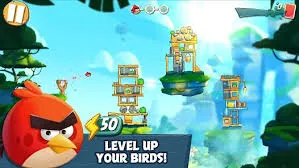
The original Angry Birds relied on pre-designed levels with fixed bird sequences. Angry Birds 2 changed that immediately. Instead of giving players a predetermined order of birds, it introduced a card-based selection system.
This was a fundamental shift. The game no longer dictated exact execution; it required adaptation. Randomized bird availability meant each attempt demanded situational decision-making rather than memorization.
Structural Innovations
- Multi-stage levels with progression checkpoints
- Bird card selection instead of fixed order
- Replay-based progression loops
- Regenerating lives system
Strategic Implication
Players now had to manage risk across multiple rooms within a single level. A failed decision early could jeopardize later rooms, increasing tension and strategic weight.
2. The Bird Card System and Tactical Resource Management
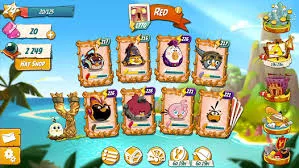
The card system became the defining mechanic of Angry Birds 2. Each bird represented not just a character, but a strategic asset. Players chose which bird to deploy based on structure type, pig placement, and environmental hazards.
Unlike earlier titles, bird usage was no longer linear. You could conserve a powerful bird for later rooms or gamble early to secure momentum.
Core Tactical Dimensions
- Bird power level scaling
- Card draw randomness
- Optional extra card usage
- Strategic conservation vs aggressive play
Decision Pressure
Every launch became a micro-calculation. The question shifted from “Can I solve this level?” to “Can I solve this level efficiently enough to survive all rooms?”

3. The Power Curve and Feather-Level Progression
Angry Birds 2 introduced permanent bird leveling through feathers. This created a long-term power curve absent in earlier titles.
Bird strength now scaled numerically. Structures that once required precision could later be brute-forced with higher-level birds. This fundamentally changed puzzle difficulty over time.
Leveling Components
- Feather upgrades
- Slingshot level multipliers
- Hat bonuses
- Event-based power boosts
Dynamic Difficulty
The leveling system meant difficulty was partially relative. Veteran players with higher flock power experienced levels differently than new players.
4. Multi-Room Level Design and Escalation Logic
Unlike single-screen puzzles of earlier entries, Angry Birds 2 implemented multi-room levels. Each room increased complexity or introduced environmental modifiers.
This design introduced endurance strategy. Success required consistency across sequential challenges.
Multi-Room Features
- Randomized room order in some stages
- Environmental hazards (fans, portals, shifting platforms)
- Boss pig encounters
- Bonus room rewards
Structural Escalation
Later rooms often required cleaner execution because bird reserves were limited. This intensified late-stage pressure.
5. Boss Battles and Mechanical Variability
Boss pigs represented a major innovation. Instead of static structures, bosses required physics-driven displacement or direct impact strategy.
These encounters broke routine destruction patterns. Players had to adjust trajectory logic and anticipate chain reactions.
Boss Encounter Mechanics
- Knockback physics
- Progressive damage thresholds
- Terrain manipulation
- Timed displacement opportunities
Psychological Shift
Boss fights created climax moments within puzzle progression, breaking repetition and increasing spectacle.
6. Clan Integration and Social Competition
The introduction of clans transformed Angry Birds 2 into a socially interconnected experience. Clan battles allowed groups to compete asynchronously for collective rewards.
This expanded the game’s scope beyond individual performance. Clan loyalty and contribution metrics added accountability.
Clan Features
- Clan battles
- Shared reward tiers
- Contribution tracking
- Cooperative chest progression
Social Motivation
Players were incentivized to remain active not just for personal gain, but for collective progress.
7. Arena Mode and Skill-Based Ranking
Arena Mode introduced direct competitive comparison. Players faced off by attempting identical level sets, with higher scores determining winners.
This created a skill-measurement environment within a physics-based game. Precision, creative destruction angles, and optimal bird usage determined victory.
Competitive Variables
- Identical level conditions
- Score multipliers
- League-based tier ranking
- Seasonal resets
Competitive Legitimacy
Arena Mode shifted Angry Birds 2 from purely casual to semi-competitive territory.
8. Tower of Fortune and Risk-Based Reward Loops
The Tower of Fortune added a probabilistic layer to progression. Players climbed floors, choosing doors for rewards while avoiding traps.
This mechanic introduced gambling-like risk management into a puzzle ecosystem.
Tower Structure
- Randomized reward floors
- Pig trap penalties
- Optional retreat mechanic
- Escalating reward tiers
Behavioral Economics
The Tower leveraged risk psychology—players weighed greed against safety, creating tension outside traditional gameplay.
9. Event Cycles and Limited-Time Multipliers
Regular events reshaped progression pacing. Double-feather days, hat events, and themed challenges altered optimal engagement timing.
These cycles kept the ecosystem dynamic, preventing stagnation.
Event Types
- Hat collection events
- Feather frenzy days
- Special boss rotations
- Holiday-themed content
Engagement Rhythm
Timed incentives encouraged repeated logins and strategic planning around event windows.
10. Long-Term Sustainability and Destruction as Identity
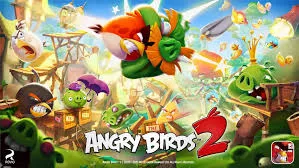
Angry Birds 2 has sustained itself by layering systems without abandoning its core: physics-based destruction. Every added feature—cards, clans, arena, tower—feeds back into the central mechanic.
The game’s long-term survival depends on balancing power inflation, event fatigue, and competitive fairness.
Sustainability Factors
- Controlled power scaling
- Balanced reward economy
- Continuous event innovation
- Community-driven engagement
Enduring Core Principle
Despite its live-service expansion, every mechanic ultimately returns to a slingshot, a structure, and the satisfaction of collapse.
Conclusion
Angry Birds 2 evolved from a straightforward puzzle sequel into a multi-layered live-service ecosystem built on strategic destruction. The card system transformed bird deployment into resource management, multi-room levels increased endurance pressure, and permanent progression systems reshaped difficulty perception. Clan battles and Arena Mode introduced competitive identity, while the Tower of Fortune embedded risk psychology into progression loops. Through consistent event cycles and evolving social structures, Angry Birds 2 redefined what a physics puzzle game could become in the live-service era. Its success lies not in abandoning its roots, but in reinforcing them through strategic complexity layered onto familiar destruction.